The Uncomfortable Truth About Single-Channel Marketing
Here’s a stat that should make every performance marketer uncomfortable: 96% of website visitors are not ready to buy on their first visit (Marketo). Yet the majority of marketing budgets are still structured as if every dollar spent should result in an immediate conversion.
This is the fundamental flaw in fragmented marketing thinking, and it’s costing brands far more than wasted ad spend. It’s costing them their entire customer relationships.
Full funnel marketing isn’t a new concept. But in 2026, it has become the only concept that actually works. The brands winning in this landscape are not the ones spending the most. They are the ones connecting awareness to consideration to conversion in a deliberate, data-driven, and continuous loop. And the data is unambiguous: companies with strong full-funnel strategies achieve 19% faster revenue growth and 15% higher profitability than their competitors (McKinsey, 2025).
If your current strategy treats the funnel as three separate campaigns managed by three separate teams, this article is for you.
What Full-Funnel Marketing Actually Means (And What It Doesn’t)
Full funnel marketing is the strategic orchestration of marketing touchpoints across every stage of the customer journey, from the moment someone first encounters your brand to the moment they become a loyal advocate.
It is not simply running a brand awareness campaign alongside a retargeting campaign and calling it a day.
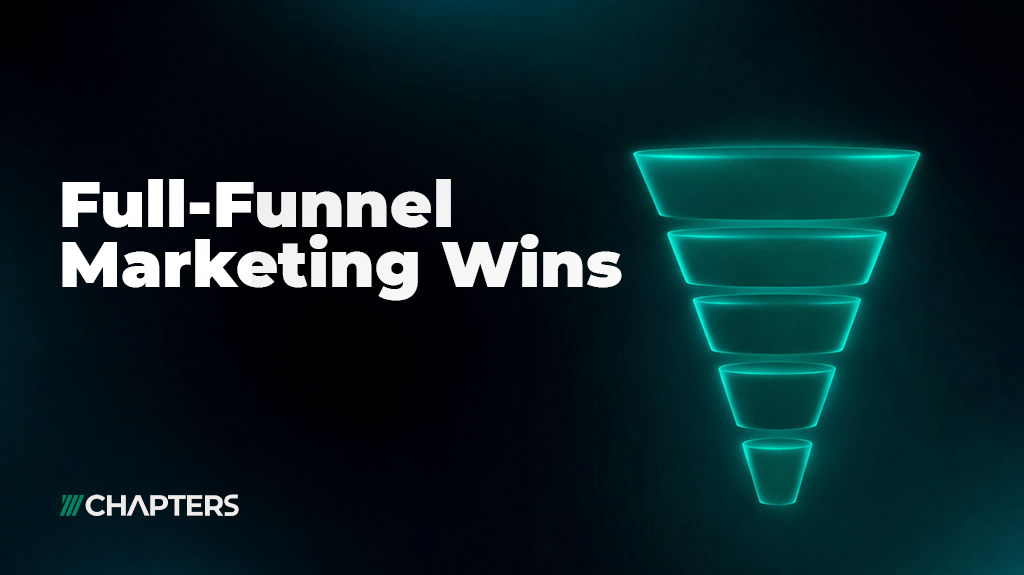
The funnel has three core stages, each with a distinct psychological state and strategic role:
Top of Funnel (TOFU): Awareness
The customer doesn’t know you exist, or doesn’t yet understand they have a problem you solve. Your job here is not to sell. It is to create memory, emotion, and recognition. Think educational content, social storytelling, video campaigns, and thought leadership. The KPIs here are reach, impressions, and brand recall, not ROAS.
Middle of Funnel (MOFU): Consideration
The customer is now aware of their problem and is actively evaluating solutions. This is where trust is built or lost. Case studies, comparison content, demos, email nurture sequences, and retargeting campaigns all live here. The KPI is engagement, lead quality, and time-to-decision.
Bottom of Funnel (BOFU): Conversion
The customer is ready to act. Friction is the enemy. Landing page optimization, high-intent paid search, offers, and urgency mechanisms live here. The KPI is conversion rate, cost-per-acquisition, and revenue.
The mistake most brands make: they invest almost entirely in BOFU and wonder why their TOFU channels produce no measurable returns. What they are actually measuring is the end of a journey they never helped the customer begin.
Why Full-Funnel Marketing Is a 2026 Imperative
The trends for 2026 point clearly in one direction: the customer journey has never been more complex, more fragmented, or more non-linear. A consumer might discover a brand on TikTok, research it via Google AI Overviews, compare options on Reddit, and finally convert through a branded search ad, all within 48 hours. Or over six weeks. There’s no single path anymore.
Key market forces demanding a full-funnel response in 2026:
1. Ad Fatigue Is Real and Measurable
Digital noise has reached a saturation point. Consumers are exposed to between 6,000 and 10,000 ads per day (Forbes). Click-through rates on display ads have fallen below 0.1% industry-wide. Brands that rely solely on bottom-funnel demand capture are fishing in an increasingly depleted pond. Full-funnel brands, by contrast, create demand before capturing it, a fundamentally different and more sustainable model.
2. Consumer Trust Has Dropped 22%
Our own analysis, supported by GWI data, shows that consumer trust in advertising has declined sharply. What drives purchase decisions now is familiarity and credibility, which are products of consistent top- and mid-funnel investment. Brands that show up with value before asking for the sale win disproportionately.
3. Privacy Changes Have Broken Last-Click Attribution
With the erosion of third-party cookies and increasing iOS privacy restrictions, the old model of attributing every conversion to a single touchpoint has collapsed. Full-funnel marketers are better equipped because they understand that value is distributed across the journey, not concentrated at the point of conversion. They invest in multi-touch attribution models, first-party data, and brand measurement, all of which become competitive advantages in a privacy-first world.
4. CAC Is Rising Across Every Channel
Customer acquisition costs have increased by an average of 60% over the past five years (Profitwell). Brands that only buy performance media are subject to increasing auction competition, rising CPCs, and shrinking margins. Full-funnel brands reduce CAC over time by building brand equity that generates organic demand, lowering their dependence on paid channels for every single conversion.
The Full-Funnel Framework: What It Looks Like in Practice
A functional full-funnel strategy is not about doing everything. It’s about doing the right things at the right stage, with a clear measurement framework for each.
Stage 1: Build Demand (TOFU)
The goal here is reach and relevance. You’re not trying to convert anyone yet, you’re trying to exist meaningfully in the minds of your target audience.
Tactics that work:
- Educational blog content and SEO-optimized pillar pages targeting informational queries
- Short-form video on TikTok, Instagram Reels, and YouTube Shorts that entertain and inform
- Thought leadership on LinkedIn targeting decision-makers in your industry
- Brand-building video ads (6–30 seconds) focused on emotion, not features
- Podcast sponsorships and creator collaborations for contextual reach
What to measure: Branded search volume growth, reach, video completion rates, content engagement, brand recall surveys.
The POV: Most agencies tell you TOFU is hard to measure, so you should spend less there. This is wrong. It is hard to measure with last-click attribution, which is not the same as unmeasurable. Invest in brand lift studies, track branded search trends, and watch your MOFU conversion rates over time. The brands winning in 2026 are the ones that refused to cut TOFU during the years when performance metrics looked shiny.
Stage 2: Build Consideration (MOFU)
This is the most neglected stage in most marketing plans. It is also the stage where decisions are most heavily influenced. A buyer deep in consideration is looking for reasons to trust one brand over another. Give them those reasons systematically.
Tactics that work:
- Retargeting campaigns with testimonials, case studies, and value-differentiation messaging
- Email nurture sequences triggered by behavior (downloads, page visits, video views)
- Comparison and “best of” content that positions your brand favorably
- Webinars, demos, and in-depth guides for B2B audiences
- Mid-funnel paid social targeting warm audiences with educational content
What to measure: Email open and click rates, content downloads, demo requests, time on site, return visit rate, lead quality scores.
The POV: The brands that win at MOFU are the ones that stop treating it as a conversion stage and start treating it as a trust-building stage. The content you produce here should answer every question a skeptical, informed buyer might have, before your sales team ever picks up the phone.
Stage 3: Capture Demand (BOFU)
Now the buyer is ready. The only job here is to remove friction. Every second of load time, every confusing form field, every unclear CTA is a conversion you lose.
Tactics that work:
- High-intent paid search campaigns on branded and competitor keywords
- Landing pages optimized through A/B testing and heatmap analysis
- Dynamic retargeting ads showing products or services the user has already viewed
- Time-sensitive offers and social proof at the point of conversion
- Live chat and AI chatbots for immediate objection handling
What to measure: Conversion rate, cost-per-acquisition, ROAS, cart abandonment rate, lead-to-close rate.
The POV: BOFU is not where marketing ends, it’s where marketing’s downstream investment pays off. If your BOFU conversion rates are low, the first place to look is not your landing page. It’s your TOFU and MOFU. Buyers who arrive with brand familiarity and established trust convert at dramatically higher rates. The conversion starts long before the click.
The Role of Paid Performance in Full-Funnel Strategy
A common misconception is that full funnel marketing is primarily an organic or brand-building play. It isn’t. Paid media is a critical accelerator at every stage of the funnel, but only when deployed with full-funnel intelligence.
At Chapters Digital Solutions, our paid performance services are built around a full-funnel media architecture that ensures every dirham or dollar spent is connected to a stage-specific objective and a clear downstream impact.
Here’s what that looks like in practice:
Paid at TOFU: Broad-reach video campaigns on YouTube and Meta, optimized for completed views and brand recall, not clicks. We run these with creative testing frameworks to identify which messages build the strongest emotional connection with target audiences.
Paid at MOFU: Custom audience retargeting and engagement campaigns, using sequenced ad delivery to move prospects through an educational arc. A viewer who watched 75% of your awareness video gets a different ad than one who visited your pricing page.
Paid at BOFU: Performance Max, Smart Shopping, and high-intent search campaigns, all informed by first-party data and audience signals built earlier in the funnel. When warm audiences arrive at this stage, conversion rates are significantly higher and CPAs significantly lower than cold traffic.
The critical insight: paid channels don’t work in isolation. A Google Ads campaign targeting high-intent keywords will consistently outperform when the audience has prior brand familiarity from Meta or YouTube. The halo effect of a full-funnel paid strategy is not anecdotal; it is consistently measurable across every account we manage.
Measuring Full-Funnel Performance: The Metrics That Matter
One of the biggest barriers to full-funnel adoption is measurement anxiety. Marketers are trained to justify every pound of spend with a direct ROI figure. Full-funnel marketing requires a more sophisticated measurement architecture.
The metrics framework by stage:
| Funnel Stage | Primary Metrics | Secondary Metrics |
| TOFU | Branded search volume, reach, brand recall | Video completion rate, share of voice |
| MOFU | Lead quality score, return visit rate, email engagement | Content downloads, demo bookings |
| BOFU | Conversion rate, CPA, ROAS | Lead-to-close rate, average order value |
| Cross-Funnel | Revenue growth rate, CAC trend, LTV:CAC ratio | Multi-touch attribution contribution |
The tool stack for full-funnel measurement:
- GA4 for cross-channel journey tracking and conversion path analysis
- Meta Ads Manager and Google Ads for channel-specific attribution
- A multi-touch attribution model (data-driven or time-decay, not last-click)
- Brand lift studies for TOFU impact measurement
- CRM integration to close the loop between marketing and revenue
The goal is not to attribute 100% of every conversion to a single touchpoint. The goal is to understand which combination of touchpoints produces the highest-quality, lowest-cost customers and invest accordingly.
Common Full-Funnel Mistakes (And How to Avoid Them)
Even brands that adopt full-funnel thinking often make strategic errors that limit their results. Here are the most common pitfalls we see at Chapters:
Mistake 1: Separate teams for separate stages. If your brand team and performance team don’t share data, creative assets, and strategic objectives, you don’t have a full-funnel strategy. You have two partial strategies running in parallel. Integration is not optional; it is the point.
Mistake 2: Cutting TOFU when budgets get squeezed. This is the most expensive short-term decision in marketing. TOFU investment creates the demand pipeline that BOFU campaigns harvest. Cutting it produces short-term savings and long-term CAC increases. Resist the pressure.
Mistake 3: Using the same creative across all stages. A brand awareness video and a conversion ad require fundamentally different creative approaches. Awareness ads build emotion and memory. Conversion ads remove friction and create urgency. Using one to do the other’s job produces poor results at both stages.
Mistake 4: Measuring TOFU with BOFU metrics. If you judge a brand awareness campaign by its direct conversion rate, it will always look like a failure. Define stage-appropriate success metrics before launch, and evaluate accordingly.
Mistake 5: Treating the funnel as linear. Modern consumers move between stages non-linearly. Someone might see your BOFU ad, not convert, consume three pieces of TOFU content, and then convert weeks later. Your strategy must accommodate re-entry at any stage.
What Full-Funnel Brands Do Differently: A Behavioral Profile
After working with brands across industries, from e-commerce and real estate to SaaS and professional services, a clear profile emerges for brands that consistently win with full-funnel marketing:
They plan audiences, not just campaigns. They know exactly who they are trying to reach at each stage, what that person needs to hear, and how they will know if the message landed.
They invest in creative diversity. They produce content for every stage, in every format, optimized for every platform, not because they have unlimited budgets, but because they understand that undifferentiated content is invisible.
They build first-party data systematically. Every touchpoint is an opportunity to collect a signal, a view, a download, an email address, a purchase. These signals power smarter targeting at every subsequent stage of the funnel.
They review performance holistically. They look at the relationship between TOFU investment and BOFU performance, not just individual channel ROI. They ask: “When we increased brand spend last quarter, what happened to our paid search conversion rate three months later?”
They iterate continuously. The best full-funnel strategies are never finished. They evolve with audience behavior, platform algorithms, and competitive dynamics.
The Bottom Line: Full-Funnel Is Not a Tactic, It’s a Philosophy
Full funnel marketing is not something you implement once and move on from. It is a fundamental shift in how you think about the relationship between your brand and your audience.
It requires patience because TOFU investment takes time to compound. It requires discipline, because the measurement is more complex than a simple ROAS number. And it requires organizational alignment, because the strategy only works when creative, media, and data teams operate as a unified system.
But the brands that make that shift, the ones willing to invest in the entire journey rather than just the final click, are the ones building durable competitive advantages. They are acquiring customers at lower costs, retaining them at higher rates, and growing in ways that performance-only brands simply cannot replicate.
In 2026, the question is no longer whether full funnel marketing works. The data is settled on that. The question is whether your organization is structured, resourced, and committed enough to execute it.
At Chapters Digital Solutions, we build full-funnel strategies that connect brand to performance, from the first impression to the final conversion and beyond. If you’re ready to stop thinking in stages and start thinking in journeys, let’s talk.
Action Checklist: Is Your Strategy Truly Full-Funnel?
- [ ] Do you have defined objectives, KPIs, and budgets for each funnel stage (TOFU, MOFU, BOFU)?
- [ ] Is your creative strategy differentiated by funnel stage and platform?
- [ ] Do you have a multi-touch attribution model in place (not last-click)?
- [ ] Are your brand and performance teams aligned on shared business goals?
- [ ] Are you measuring branded search volume as a proxy for TOFU effectiveness?
- [ ] Do you have a first-party data strategy that feeds audience targeting at each stage?
- [ ] Have you defined what a qualified lead looks like at the MOFU stage?
- [ ] Are you tracking CAC and LTV trends over time, not just short-term ROAS?
If you checked fewer than five of these, your funnel has gaps, and those gaps are costing you growth.
Written by the Digital Strategy Team at Chapters Digital Solutions, a performance-driven digital marketing agency specializing in full-funnel strategy, paid media, SEO, and content marketing. All benchmarks cited are based on published industry research and internal client data aggregated and anonymized.
Results vary by industry, budget, and market conditions. These insights represent generalized strategic frameworks.