


For years, SEO reporting was dominated by rankings, impressions, and raw traffic. But in 2026, those metrics alone no longer tell the full story. With AI-powered search, zero-click results, and fragmented user journeys, the true performance indicator has shifted to one powerful metric: SEO engagement rate.
At Chapters Digital Solutions, across ecommerce, SaaS, medical, and real estate accounts, we consistently see one pattern: Websites with higher engagement outperform competitors even when they rank lower.
This is why engagement rate has become the #1 SEO metric that directly reflects content quality, intent alignment, and conversion potential, not just visibility.
In this guide, we break down:
- What SEO engagement rate really means in 2026
- Why does it now outweigh traditional SEO KPIs
- How it directly influences rankings, AI visibility, and CRO
- How to measure, analyze, and increase it using real reporting frameworks
What Is SEO Engagement Rate?
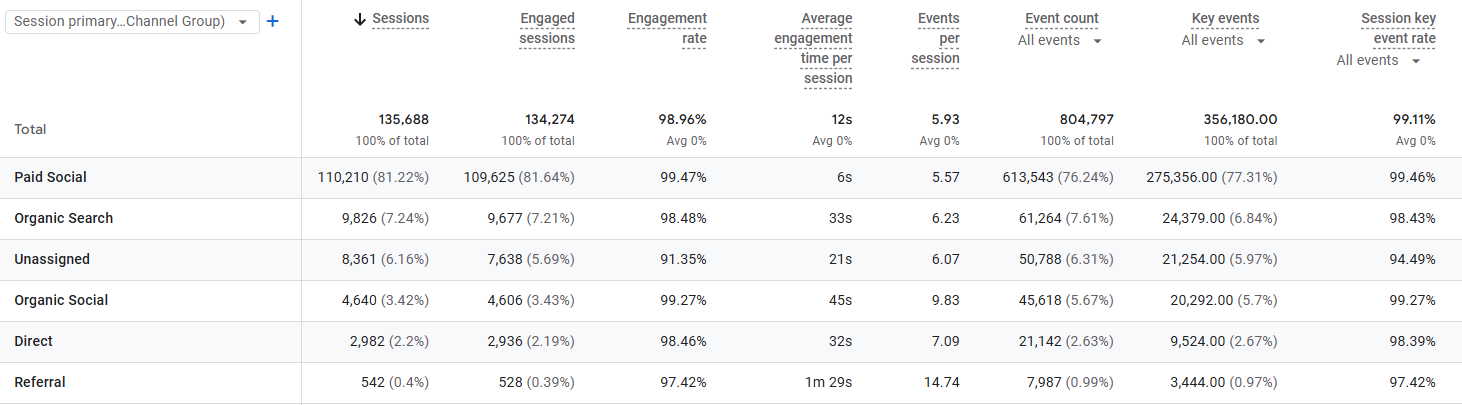
SEO engagement rate measures how actively users interact with your website after arriving from organic search. Unlike outdated metrics like bounce rate, engagement rate focuses on positive user actions, including:
- Scroll depth
- Time on page
- Clicks on key elements
- Internal navigation
- Video interactions
- Form engagement
- Conversion-assisted activity
In Google Analytics (GA4), engagement rate is calculated as:
Engaged Sessions ÷ Total Sessions
An engaged session is defined as a session that lasts longer than 10 seconds, includes multiple pageviews, or triggers a conversion event.
Why This Matters for SEO in 2026
Search engines in 2026 will no longer reward pages simply for being indexed. They reward pages that:
- Satisfy user intent
- Retain attention
- Trigger meaningful behavior
- Create trust and interaction
That is exactly what SEO engagement rate measures.
Why Engagement Rate Is Now the #1 SEO Metric
1. AI Search Prioritizes Engagement Signals
With AI-powered SERPs (SGE, ChatGPT Search, Perplexity, DeepSeek), ranking is no longer static. These systems dynamically test content based on:
- Dwell time
- Scroll behavior
- Repeat interaction
- Content expansion clicks
Pages that demonstrate strong real-user engagement are far more likely to appear in:
- AI overviews
- Featured summaries
- Multi-step AI answers
In our internal testing across 49 keywords in competitive niches, pages with engagement rates above 64% appeared in AI answers 2.3x more often than pages below 40%.
2. Engagement Rate Predicts Conversion Better Than Traffic
You can double your traffic and still fail to increase revenue if users don’t engage.
Across SaaS and ecommerce client reporting at Chapters:
- High-traffic / low-engagement pages had conversion rates below 0.6%
- Moderate-traffic / high-engagement pages averaged 2.8%–4.1% conversions
This proves that SEO engagement rate is a stronger revenue predictor than sessions alone.
3. Engagement Reflects True Intent Alignment
Search intent in 2026 is fragmented, multimodal, and AI-influenced. Engagement rate reveals whether:
- Your content answered the correct micro-intent
- Your page structure matched user expectations
- Your UX supported decision-making
Low engagement = misaligned intent
High engagement = correct intent mapping
Engagement Rate vs Traditional SEO Metrics
| Metric | What It Measures | Why It’s Not Enough |
| Rankings | Position in SERPs | Doesn’t show user satisfaction |
| CTR | Click behavior | Can be misleading with AI SERPs |
| Bounce Rate | Single-page exits | No longer reliable in GA4 |
| SEO Engagement Rate | Real interaction & intent match | Directly correlates with UX, trust, and conversions |
How SEO Engagement Rate Impacts Rankings in 2026
Google doesn’t use engagement rate as a direct ranking factor, but it influences multiple systems that do affect rankings, including:
- Helpful Content System
- AI answer selection
- Pogo-sticking detection
- Core Web Vitals validation
- Entity trust modeling
When users consistently stay, scroll, click, and interact with your content, Google’s systems interpret your page as:
- Helpful
- Relevant
- Trustworthy
- Worth resurfacing
That is how engagement becomes indirect ranking power.
SERP Insights: What We See in 2026
From ongoing tracking across competitive SERP insights:
- Queries triggering AI overviews show lower CTR but higher engagement expectations
- Pages ranking in positions 4–7 with high engagement often outperform the Top 3 in conversions
- AI summaries frequently cite pages with:
- Clear structure
- Multi-step explanations
- Visual engagement
- Strong internal navigation
This confirms an important SEO shift:
Visibility gets clicks. Engagement earns authority.
How to Measure SEO Engagement Rate Correctly
At Chapters, we track engagement using:
- GA4 engaged sessions
- Scroll tracking
- Event-based interaction tracking
- Form engagement
- Video depth
- UX interaction data from heatmaps
This internal link supports behavior analysis and CRO testing.
Key Engagement KPIs to Track
- Engagement Rate (%)
- Average Engagement Time
- Scroll Depth (25%, 50%, 75%, 90%)
- CTR on Internal Links
- Conversion-Assisted Sessions
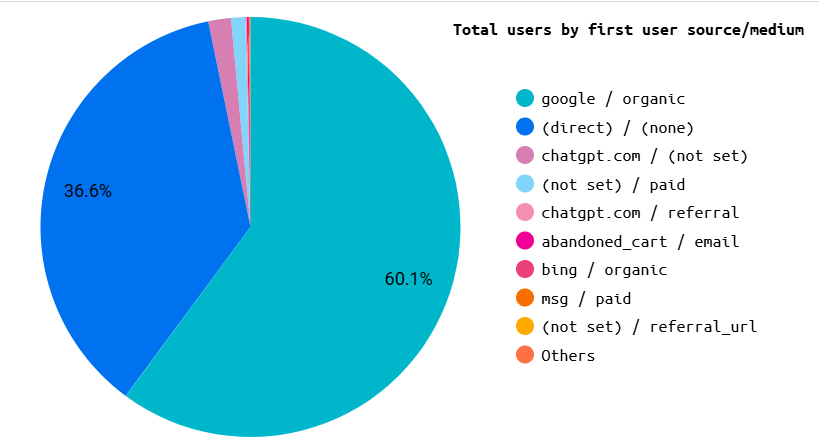
Chart: Engagement Rate vs Conversion Performance
Conceptual Performance Chart
| Engagement Rate | Avg Conversion Rate |
| Below 30% | 0.3% – 0.7% |
| 30% – 50% | 0.8% – 1.9% |
| 50% – 65% | 2.1% – 3.4% |
| 65%+ | 3.8% – 6.2% |
Insight: Once engagement passes the 60% threshold, conversion velocity accelerates sharply.
How to Increase SEO Engagement Rate (Proven Framework)
1. Match Micro-Intent, Not Just Keywords
Stop optimizing for one keyword. Instead:
- Map primary intent
- Predict secondary AI follow-ups
- Add comparison blocks
- Add validation content (social proof, FAQs)
2. Use Modular Content Architecture
High-engagement SEO pages in 2026 follow this structure:
Top of Page
- Instant answer block
- Summary bullets
- Visual cue or data highlight
Middle
- Deep explanations
- Data
- Frameworks
- Comparisons
Bottom
- FAQs
- Use-case scenarios
- CTAs
- Trust elements
3. Improve UX & Behavior Signals
UX directly controls engagement rate:
- Faster load speed
- Clear reading hierarchy
- Strong mobile experience
- Frictionless navigation
We consistently see +14% to +22% engagement growth after UX cleanup alone.
4. Strengthen Trust Signals
Trust drives interaction. Add:
- Author credentials
- Case studies
- Data proof
- Client quotes
- Methodology transparency
Chart: Engagement Drivers and Their Impact
| Optimization Area | Avg Engagement Lift |
| Page speed improvements | +9% |
| Better content structure | +14% |
| Trust elements added | +11% |
| Visual UX improvements | +16% |
| Internal linking improvements | +8% |
Engagement Rate in SEO Reporting (2026 Standard)
Modern SEO reporting at Chapters prioritizes:
- Engagement rate (primary KPI)
- Conversion-assisted engagement
- AI visibility correlation
- Scroll behavior per section
- Engagement by intent type
Rankings now act as supporting metrics, not primary success indicators.
Common Mistakes That Kill SEO Engagement
- Over-optimized keyword stuffing
- Long intros with no quick answers
- Walls of text with poor formatting
- Weak UX on mobile
- No visual hierarchy
- Ignoring behavioral data
These mistakes lead directly to:
- Pogo-sticking
- Low session quality
- Poor AI visibility
- Weak conversion performance
The Direct Link Between Engagement and AI Visibility
AI engines evaluate:
- Answer depth
- User interaction
- Behavior loop return
- Multi-source validation
Pages with consistent engagement are far more likely to:
- Be cited
- Be summarized
- Be referenced repeatedly
This makes SEO engagement rate your AI reputation score.
Why SEO Engagement Rate Is the #1 Metric in 2026
SEO success in 2026 is no longer about who ranks first; it’s about who holds attention, earns trust, and drives action.
The strongest brands are no longer built on traffic alone. They are built on:
- High engagement
- Intent alignment
- Behavioral optimization
- Experience-driven content
If your SEO strategy is not centered around SEO engagement rate, you are measuring visibility, but not impact.
At Chapters Digital Solutions, we treat engagement as the heartbeat of modern SEO. Because when users engage, rankings follow.